What Are the Top Types of SiC Lasers?
Silicon carbide is no longer a niche material in advanced electronics. It now supports electric vehicles, renewable-energy inverters, aerospace systems, and high-temperature power modules. This expansion is increasing demand for precise, low-damage processing methods. A sic laser can machine, drill, scribe, or texture this extremely hard ceramic material. The correct laser type depends on wavelength, pulse duration, beam quality, and thermal control.
Industry data supports this growing technical focus. Yole Group’s Status of the SiC Industry 2024 report describes strong investment across SiC substrates, epitaxy, and power-device manufacturing. The report also highlights continuing pressure to improve wafer quality and production yield. These pressures make laser selection important. A poor parameter setting can leave microcracks around a narrow kerf. That damage may remain invisible until electrical testing.
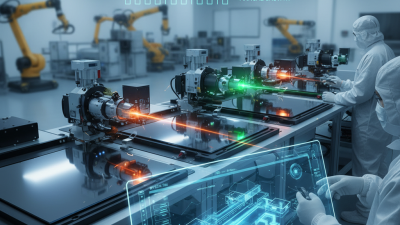
This guide examines the leading types of sic laser systems used for SiC processing. Fiber lasers offer strong industrial reliability and high average power. CO2 lasers can support certain surface treatments and bulk-material applications. UV lasers reduce the affected zone during fine marking and thin-wafer work. Ultrafast picosecond and femtosecond lasers can limit heat diffusion during precision cutting. The U.S. Department of Energy’s wide-bandgap semiconductor assessments also recognize SiC’s advantages in high-temperature and high-voltage applications, reinforcing the need for advanced manufacturing tools.
No single laser wins every application. That is the uncomfortable part. Thickness, doping, crystal orientation, edge quality, and throughput can change the answer. Real production trials still matter. The sections ahead compare each laser type through performance, limitations, operating cost, and practical use cases.
What Are SiC Lasers and How Do They Work?
Silicon carbide (SiC) lasers use SiC as an optical or electronic platform, not simply as a stronger cutting tool. SiC has a wide bandgap of about 3.26 eV, according to the U.S. Department of Energy’s Wide Bandgap Power Electronics Technology Report. This property supports operation under heat, radiation, and high electric fields.
Most devices begin with energy entering the material through electrical injection or optical pumping. Defects inside the crystal, such as vacancies, can then release photons at specific wavelengths. Researchers commonly study defect-center emitters, waveguide lasers, and Raman lasers. Some SiC defect centers operate near the 1,100–1,300 nanometer range, as reported in peer-reviewed photonics research. The process is precise: a pump excites the crystal, the optical cavity reinforces selected light, and the device emits a narrow beam.
The application landscape is still developing. The IEA’s Global EV Outlook 2024 recorded more than 17 million electric-car sales in 2023, increasing demand for compact SiC power electronics and related photonic testing systems. That demand does not automatically make SiC lasers commercially mature. A laboratory emitter may produce excellent single photons, yet struggle with heat removal, cavity losses, or manufacturing consistency. This distinction matters. Real devices are less perfect. Calibration remains essential, especially when wavelength stability and defect uniformity affect measurement accuracy.
How Do Different SiC Laser Types Compare?
Choosing a laser for silicon carbide depends on thickness, surface finish, and production speed. Different SiC laser types behave very differently.
Nanosecond fiber lasers offer strong average power and practical cutting speeds. They suit rough cutting, but heat can form recast layers or microcracks. CO2 lasers deliver high thermal energy and may work well on thicker SiC parts. However, their larger heat-affected zones can reduce edge quality.
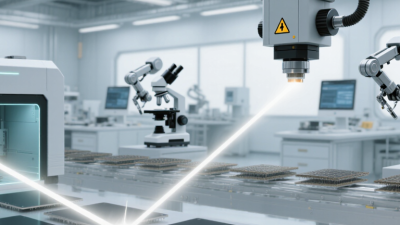
UV lasers remove material more gently because shorter wavelengths improve absorption. They are useful for thin wafers, marking, and delicate features. Ultrafast picosecond and femtosecond lasers create extremely short pulses. This limits heat diffusion and often produces cleaner edges. The trade-off is slower processing and higher equipment complexity.
No single source wins.
In hands-on process development, edge inspection matters more than headline power. A fast cut is not automatically a good cut. I would compare kerf width, taper, debris, crack depth, and post-processing time. Results can change with crystal orientation and cooling conditions. That detail is easy to underestimate.
Tips:
Start with small test coupons. Use microscopy after every parameter change. Reduce pulse overlap when heat damage appears. For precision work, prioritize pulse duration and beam control over raw power. Keep records of speed, focus position, and assist-gas settings. These notes expose weak assumptions quickly.
What Are the Key Applications of SiC Lasers?
SiC lasers are an emerging group of sources built around silicon carbide materials. Their main types include defect-center lasers, solid-state designs, and experimental nonlinear devices. Each type produces different wavelengths, power levels, and operating behavior. The most useful applications depend on those differences. For example, defect-center sources may support compact sensing systems, while higher-power designs could serve industrial measurement or ultraviolet research. The field is promising, but not fully mature. Performance data can vary between laboratories.
Tips: Match the wavelength to the target material or sensor. Check heat management carefully. Test beam stability before field deployment. A small optical bench can reveal alignment problems early. Do not assume laboratory results will transfer directly to production equipment.
SiC lasers may support spectroscopy in harsh environments, where heat, vibration, or chemical exposure can damage ordinary optical components. Engineers are also studying them for gas detection, combustion monitoring, and precision temperature sensing. In manufacturing, focused beams could assist surface treatment, micromachining, or inspection of advanced ceramics. Their potential in quantum sensing is also receiving attention, especially when defect centers interact with light and magnetic fields. The practical value remains application-specific. A sensor near a furnace needs different reliability than a laboratory microscope. That distinction is easy to overlook. Further testing should examine lifetime, output consistency, packaging, and calibration drift under real operating conditions.
How Can You Choose the Right SiC Laser Type?
Choosing the right SiC laser starts with the material, not the machine label. Silicon carbide is hard, brittle, and thermally conductive. Nanosecond lasers suit rough cutting and high-throughput trimming. However, they can leave heat-affected edges. Picosecond lasers reduce thermal damage and often fit wafer dicing or precision drilling. Femtosecond systems deliver the cleanest interaction, though their higher cost can challenge production budgets.
Wavelength matters as much as pulse duration. Ultraviolet light usually improves absorption and edge quality on thin SiC. Green or infrared sources may provide stronger throughput, but they require careful testing. A practical trial should measure kerf width, chipping, taper, debris, and pulse-to-pulse stability. Do not judge quality by speed alone. A fast cut may create extra polishing work.
Market data supports this caution. Yole Group’s Power SiC 2024 report estimates continued double-digit growth in SiC power-device demand through the decade. SEMI reports also show expanding investment in larger SiC wafer manufacturing. That pressure makes yield important, not merely cycle time. I still see teams choosing femtosecond lasers automatically. That is not always wise. For thick substrates, a hybrid process may outperform one ultra-short-pulse source. Test the actual thickness, coating, and geometry. Then compare total cost per acceptable part, including inspection and rework.