Choosing among China’s top 10 ODM O Rubber Ring Manufacturers requires more than comparing online catalogs. Buyers need evidence of material control, molding accuracy, testing discipline, and communication quality. An experienced supplier should explain rubber selection, hardness ranges, temperature resistance, compression set, and sealing performance in practical terms.
This guide examines manufacturers that support original design development and private-label production. It considers engineering capabilities, prototype services, tooling support, production capacity, quality inspection, and export experience. Details such as sample lead time, drawing review, tolerance control, and packaging consistency can reveal more than polished factory photos. A reliable ODM O Rubber Ring Manufacturer should also provide traceable material information and clear inspection records.
Not every supplier will fit every application. Some may excel at automotive seals, while others focus on hydraulic equipment, medical devices, or industrial machinery. Buyers should verify certifications, audit production sites where possible, and test samples under actual working conditions. A catalog may look impressive. Performance must still be proven.
The ranking is not absolute. Supplier information can change, and public claims may require independent confirmation. That limitation matters. Pricing also depends on compound, tooling complexity, order quantity, and inspection requirements. The following overview offers a practical starting point for procurement teams seeking capable Chinese partners, while leaving room for technical review, negotiation, and careful qualification before purchase.
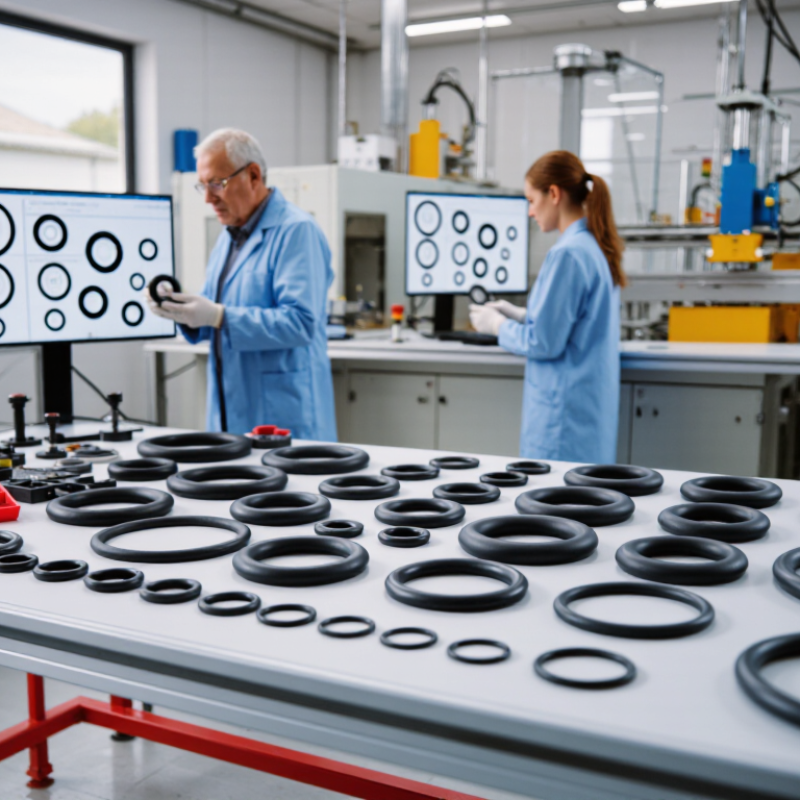
ODM O-ring manufacturing in China involves more than copying a buyer’s drawing. It requires design review, material selection, tooling, molding, inspection, and stable production control. An experienced manufacturer studies pressure, temperature, chemical exposure, and installation conditions before recommending rubber compounds. Small details matter. A sharp mold edge can damage sealing performance.
Buyers should request material certificates, dimensional reports, and compression-set test data. Useful checks include hardness, inner diameter, cross-section, flash, and surface defects. For demanding applications, samples should undergo heat aging, leakage testing, and repeated compression tests. A reliable ODM partner also controls compound batches and records mold maintenance. Traceability protects buyers when a production issue appears months later.
Clear communication reduces costly changes. Share drawings, working temperatures, media information, annual volume, and packaging requirements early. Ask how the factory handles revisions and rejected parts. We have seen projects fail because the drawing missed an assembly chamfer. That mistake was preventable. However, no supplier is perfect, and a polished audit cannot replace physical samples. Buyers should compare pilot-run results with real installation conditions. A factory may meet laboratory tolerances yet struggle with fast automated assembly. Practical feedback remains essential.
Material selection is a key part of ODM O-ring manufacturing. The chart compares commonly specified elastomers by their typical upper continuous service temperature. Actual performance depends on the compound formulation, sealing medium, pressure, and application conditions.
Choosing an ODM O-ring supplier requires more than comparing unit prices. Grand View Research estimated the global O-ring seals market at about USD 3.1 billion in 2023, indicating strong demand and intense competition. Buyers should examine design capability, material knowledge, tooling control, and production consistency.
Ask for evidence. A capable manufacturer should provide compound specifications, batch traceability, dimensional reports, and compression-set results. For critical applications, request testing against relevant ASTM or ISO methods, not only a general quality certificate.
The latest ISO Survey reports more than 1.2 million ISO 9001 certificates worldwide, but certification alone cannot prove reliable O-ring performance. Certificates can mislead.
Review the supplier’s ODM process carefully. Can its engineers recommend EPDM, FKM, silicone, or another compound based on temperature, pressure, fluids, and exposure time? Does it use first-article inspection, mold verification, and documented engineering changes?
Small details matter: a flash line on a sealing surface, inconsistent color, or poorly stored rubber can cause leakage. Ask to audit records, inspect samples under magnification, and compare three production batches.
A polished sample is insufficient. Buyers should also verify capacity, lead-time data, corrective-action speed, and packaging conditions.
Some suppliers promise custom development, yet quietly outsource tooling or testing. That is an uncomfortable risk, and it deserves direct questions.
China’s top 10 ODM O-ring manufacturers should be judged by engineering depth, not catalogue size. Their profiles typically reveal different strengths: automotive sealing, hydraulic systems, medical components, food-grade compounds, and high-temperature aerospace applications. Strong suppliers usually support material selection, mold design, prototype testing, and controlled mass production.
The U.S. Department of Energy estimates that compressed-air leaks can waste 20–30% of compressor output. This makes compound accuracy and dimensional control practical cost issues. The top profiles should therefore show ISO 3601 inspection methods, batch traceability, hardness testing, and documented compression-set results. Some manufacturers offer silicone, EPDM, FKM, and nitrile compounds, while others focus on custom tooling and short production runs.
A useful profile also records factory experience. Ask whether technicians inspect flash under magnification and measure groove fit with calibrated gauges. Small details matter. Reports from global industrial rubber market analysts continue to identify automotive, fluid handling, and industrial equipment as major demand sectors. Yet public profiles can feel polished and incomplete. That is a warning. Buyers should verify test reports, mold ownership, sample consistency, and change-control procedures before approving an ODM partner. A low quotation may hide higher scrap rates or unstable material batches.
When buyers compare China’s top ten ODM O-ring manufacturers, material selection deserves more than a catalog check. Nitrile suits many oil-contact applications, while silicone handles wider temperature changes. EPDM performs well with weather, steam, and water, but it is unsuitable for some oils. Fluorocarbon compounds resist heat and chemicals, although their cost is higher. Ask for compound codes, hardness ranges, temperature data, and actual test reports. Feel the difference.
Customization should cover more than color or packaging. A capable ODM team reviews groove dimensions, sealing pressure, stretch, surface finish, and compression set. Request prototype rings made from the intended production compound. A neat sample can hide poor mold control. Check flash, joints, burrs, concentricity, and measured inner diameter under proper lighting. For critical seals, request first-article inspection records and batch traceability. I have seen drawings pass review while assembly exposed an overlooked tolerance. That mistake is costly.
Production capacity must match demand without weakening quality controls. Compare mold availability, mixing equipment, curing presses, inspection staff, and monthly output. Ask how the factory manages urgent orders and compound changes. A large stated capacity means little if lead times shift every month. Evaluate pilot runs, rejection rates, sampling plans, and corrective-action records. Independent testing can verify hardness, tensile strength, elongation, and leakage performance. Buyers should also confirm communication speed and engineering ownership. Not every comparison is perfect. Confident promises still need evidence.
| Rank | Anonymous Manufacturer Profile | Core O-Ring Materials | Common Temperature Range | Customization Capability | Typical Size and Section Range | Quality and Compliance Focus | Production Capacity Band | ODM Suitability | Recommended Buyer Applications |
|---|---|---|---|---|---|---|---|---|---|
| 1 | Profile A High-volume industrial rubber sealing producer | NBR FKM EPDM Silicone | Approximately -40°C to 250°C, depending on compound and application | Custom compound selection, tooling, colors, hardness, packaging, and dimensional drawings | Standard metric and AS568-style sizes; custom cross-sections available | Incoming material inspection, mold qualification, visual inspection, dimensional checks, and batch traceability | High-volume: typically suitable for repeat orders from 1 million pieces per month and above | ★★★★★ Strong for mature products and recurring programs | Automotive, industrial equipment, hydraulic and pneumatic assemblies |
| 2 | Profile B Precision custom-seal manufacturer | FKM HNBR NBR EPDM | Approximately -45°C to 200°C; specialty compounds may extend the range | Engineering support, reverse drawing review, prototype tooling, compound matching, and low-flash molding | Small to large custom diameters; tight tolerances subject to geometry and material | Dimensional inspection, hardness testing, tensile and elongation testing, and appearance control | Medium-to-high volume: approximately 300,000–1,000,000 pieces per month | ★★★★★ Strong for engineered and customized parts | Oil and gas equipment, pumps, valves, machinery, and demanding industrial seals |
| 3 | Profile C Silicone and medical-grade elastomer specialist | VMQ LSR EPDM FKM | Approximately -60°C to 200°C for common silicone grades | Color matching, translucent or colored compounds, cleanroom-compatible processing, and custom tooling | Standard O-ring sizes plus miniature and thin-section designs | Material batch records, post-curing control, dimensional inspection, and cleanliness procedures where specified | Medium volume: typically 100,000–500,000 pieces per month | ★★★★☆ Strong for clean, flexible, and temperature-resistant designs | Food equipment, medical devices, laboratory equipment, lighting, and consumer products |
| 4 | Profile D Automotive and mobility sealing producer | NBR EPDM FKM ACM | Approximately -40°C to 200°C, depending on elastomer selection | Application-specific compound development, automated trimming, custom packaging, and assembly support | Metric, inch, and custom sizes for static and dynamic sealing applications | Process control plans, sample approval, dimensional capability studies, and batch inspection | High-volume: generally suitable for 500,000–2,000,000 pieces per month | ★★★★☆ Best for stable automotive supply programs | Vehicle systems, battery components, fuel systems, cooling systems, and machinery |
| 5 | Profile E Low-to-medium volume custom molding supplier | NBR EPDM Silicone CR | Approximately -50°C to 180°C for commonly supplied compounds | Prototype quantities, custom colors, hardness from approximately 40 to 90 Shore A, and private-label packaging | Standard sizes and custom parts generally from 0.5 mm section upward, subject to design review | Basic material certificates, hardness measurement, visual inspection, and dimensional sampling | Flexible volume: approximately 50,000–300,000 pieces per month | ★★★★☆ Suitable for product launches and diversified SKU programs | OEM replacement parts, appliances, general machinery, and plumbing products |
| 6 | Profile F Hydraulic and pneumatic seal producer | NBR HNBR FKM PU | Approximately -40°C to 220°C, subject to compound and media exposure | Custom hardness, backup-ring matching, groove design review, tooling modification, and kitting | Standard hydraulic sizes, metric sizes, and application-specific dimensions | Hardness, tensile, compression set, dimensional, and surface-defect testing may be specified by contract | Medium-to-high volume: approximately 250,000–900,000 pieces per month | ★★★★☆ Strong for fluid-power and maintenance programs | Hydraulic cylinders, pneumatic controls, compressors, pumps, and valves |
| 7 | Profile G General-purpose rubber component manufacturer | NBR EPDM CR Silicone | Approximately -40°C to 180°C for common commercial grades | Custom molds, logo-free OEM packaging, color options, hardness selection, and sample approval | Standard O-rings and simple custom geometries in small, medium, and large diameters | Visual inspection, sampling inspection, basic dimensional control, and compound identification | Medium volume: approximately 100,000–600,000 pieces per month | ★★★☆☆ Practical for cost-sensitive standard products | General industrial equipment, tools, hardware, and maintenance kits |
| 8 | Profile H High-temperature and chemical-resistance specialist | FKM FFKM FVMQ PTFE | Approximately -55°C to 325°C for selected specialty materials | Specialty compound selection, custom geometries, low-compression-set options, and application testing | Precision sizes and custom sections; design feasibility depends on material hardness and geometry | Material verification, hardness, compression-set, dimensional, and media-compatibility testing | Specialty volume: approximately 20,000–200,000 pieces per month | ★★★★☆ Best for technically demanding, lower-volume applications | Chemical processing, semiconductor equipment, vacuum systems, and high-temperature machinery |
| 9 | Profile I Export-oriented standard O-ring supplier | NBR EPDM FKM Silicone | Approximately -50°C to 200°C, depending on material grade | Fast sampling, standard-size catalogs, custom bags and labels, and limited tooling adaptation | Broad coverage of metric and inch standard sizes; custom sizes available for qualified orders | Batch sampling, visual inspection, hardness testing, and basic dimensional verification | High standard-stock capacity: often suitable for 500,000–1,500,000 pieces per month | ★★★☆☆ Efficient for standard replenishment orders | Distributors, repair kits, agricultural machinery, and industrial spare parts |
| 10 | Profile J Flexible ODM supplier for mixed-material programs | NBR EPDM FKM VMQ | Approximately -60°C to 250°C across its common material portfolio | Multi-material sourcing, prototype-to-production support, custom colors, packaging, and assembly kits | Standard sizes, miniature O-rings, and custom dimensions subject to tooling review | Incoming inspection, first-article approval, production sampling, and final visual inspection | Flexible volume: approximately 50,000–400,000 pieces per month | ★★★☆☆ Useful for buyers managing several product categories | Consumer equipment, industrial sensors, electrical enclosures, and OEM kits |
Buyer note: Temperature ranges, production volumes, material availability, tolerances, certifications, and testing scope vary by compound, tooling, geometry, and purchase agreement. Confirm current specifications, compliance documents, samples, and production capacity directly before placing an order.
A capable ODM supplier should understand your sealing application, not only copy a sample. Ask for material data, hardness tolerance, temperature range, and chemical resistance. Request production drawings with revision numbers. Confirm who owns the tooling and design files. This detail prevents disputes later.
During an audit, inspect the mixing room, molding presses, trimming area, and laboratory. Check whether raw materials carry batch labels. Review calibration records for hardness testers, gauges, and measuring tools. Ask to see recent inspection reports, not prepared examples.
Inspect finished rings under proper lighting. Look for flash, cuts, bubbles, uneven joints, and size variation. A clean factory does not prove stable production.
Sample approval needs discipline. Measure inner diameter, outer diameter, and cross-section from several pieces. Test compression set when the application requires long-term sealing. Record acceptance limits in the purchase order.
Confirm minimum order quantity, mold charges, production lead time, packaging, and shipment terms. Include change-control rules for materials, tooling, and subcontractors. Small packaging details matter; crushed rings may fail before installation.
I once considered visual quality sufficient. That was a weak assumption. Performance testing should guide the final decision. Suppliers should also provide traceability from compound batch to shipment carton, with corrective-action records when defects appear.