Selecting the right Mcb Riveting Machine affects terminal strength, cycle time, safety, and long-term maintenance costs. A small riveting error can loosen an electrical connection inside an MCB. The result may be difficult to detect during final inspection.
Industry data supports careful evaluation. Grand View Research’s 2024 circuit breaker market analysis identifies automation, reliability, and electrical safety as major development priorities. MarketsandMarkets also reports continuing investment in circuit protection manufacturing through smart factories and higher production efficiency. These trends make machine selection more than a price comparison. It becomes a quality decision.
This guide presents seven practical tips for choosing the best Mcb Riveting Machine. The recommendations focus on rivet consistency, tooling accuracy, feeding stability, production speed, and operator protection. They also consider changeover time and after-sales support. Important details include spindle alignment, adjustable riveting pressure, sensor response, and rejected-part control. Ask for sample testing. Numbers matter.
A supplier should provide measurable results, not only attractive photographs. Request cycle-time records, repeatability data, maintenance instructions, and references from comparable production lines. ISO 9001-based quality processes can strengthen supplier credibility, while IEC 60898-1 remains a useful reference for low-voltage circuit-breaker requirements. However, compliance alone does not guarantee a suitable machine. That assumption is risky.
No machine is perfect. Real factories contain dust, operator variation, worn tooling, and unexpected material changes. A thoughtful buyer tests these conditions before signing. The best decision balances technical performance, documented experience, total ownership cost, and dependable service. A cheaper machine may become expensive when every adjustment stops production.
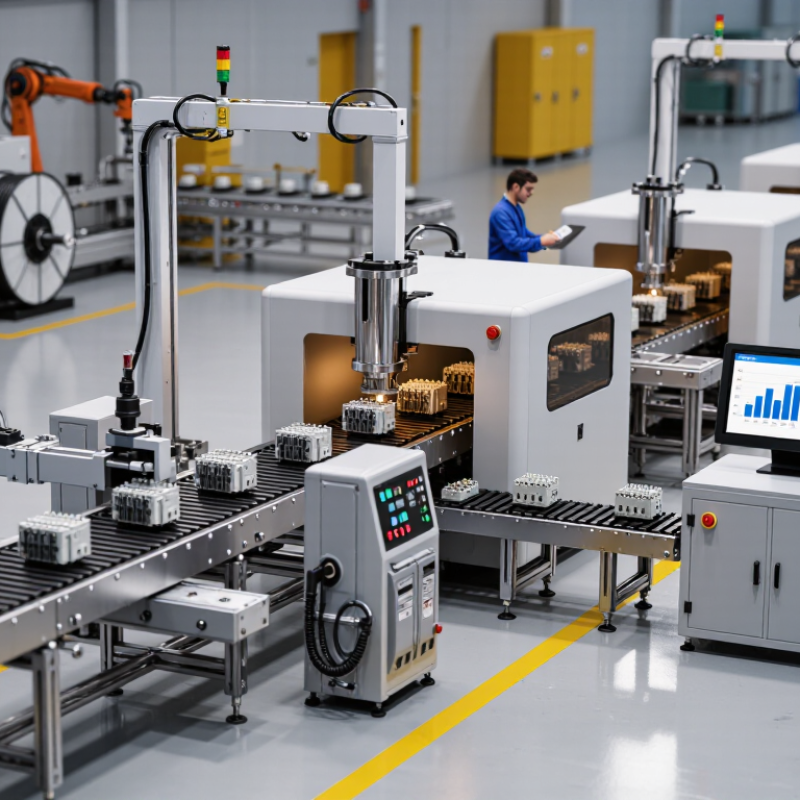
Before comparing an MCB riveting machine, define the exact job it must perform. Record breaker dimensions, rivet diameter, material, head shape, and acceptable joint height. Measure the required force with trial assemblies, not estimates from a catalog. Small errors can loosen a terminal or damage the housing. Keep samples nearby.
Production goals should include hourly output, shift length, changeover time, and rejection limits. Specify whether operators load parts manually or use automatic feeding. Ask for controlled stroke depth, adjustable pressure, and repeatable positioning. For quality assurance, require process records, sample checks, and accessible maintenance points. Cycle time matters. Yet speed alone misleads.
In practice, test the machine with your actual MCB components and rivets. Check noise, vibration, alignment, and jam recovery during a full production simulation. A machine may meet its advertised output but fail during frequent size changes. I have seen teams overvalue peak speed and overlook feeding interruptions. That assumption deserves questioning. Let operators review loading height, controls, guarding, and cleaning access. Document every result before selecting equipment.
Define the required production volume before selecting an MCB riveting machine. The chart converts hourly output goals into the maximum average cycle time per finished MCB assembly using the formula: 3,600 seconds ÷ required output per hour.
These planning values represent common production targets for low-, medium-, and high-volume assembly lines. Actual machine requirements should also include loading time, riveting force, fixture changes, quality inspection, and planned downtime.
7 Tips for Choosing the Best MCB Riveting Machine
Compare machine types before comparing prices. Pneumatic models suit steady, medium-volume work and offer simple maintenance. Hydraulic machines provide higher forming force for harder materials or larger rivets. Servo-electric systems deliver precise stroke control, lower air use, and better process monitoring. The right choice depends on your MCB design, not marketing claims.
Check capacity in real production conditions. Confirm rivet diameter, rivet length, throat depth, tooling space, and feeding range. A machine rated for 2,000 units per hour may slow down with inspection pauses or frequent bowl refills. Leave room for future models. Too little capacity becomes expensive quickly. Too much capacity may waste energy and floor space.
Study riveting performance, not only cycle speed. Measure head height, joint strength, deformation, and position accuracy across repeated samples. Ask for test data using your actual copper, brass, or plated components. Inspect the first and last pieces from a long trial. Small variations matter. A clean, consistent rivet head supports reliable electrical assembly.
Evaluate changeover time and operator access. Tooling should be replaceable without awkward adjustments. Check sensors, guarding, noise levels, and fault records. A clear control panel helps during rushed shifts. Do not ignore service documentation. It can prevent long production delays.
Review feeder stability. Misfeeds often hurt output more than a slow press. Test the machine with mixed component tolerances. Also check whether force, stroke, and alarm data can be exported for quality records.
Choose capacity based on demand forecasts, but challenge your assumptions. Forecasts can be wrong. A modest machine with strong consistency may outperform a faster machine that needs constant correction. Test before committing.
| Selection Tip | Machine Type | Typical Output Capacity | Common Rivet Diameter Range | Typical Riveting Force | Riveting Performance | Automation and Feeding | Best-Fit Production Situation | Important Limitation |
|---|---|---|---|---|---|---|---|---|
| 1. Match the machine to the required production volume | Manual lever or hand-operated riveting machine | Approximately 3–8 assemblies per minute, depending on operator skill and loading time | About 2–5 mm | Generally below 10 kN | Good control for prototypes, samples, repair work, and low-volume assembly; consistency depends strongly on the operator | Manual loading; normally no automatic feeding | Prototype production, maintenance, and small batches | Low throughput and greater variation in rivet height or forming quality during long production runs |
| 2. Select the power source according to the available factory utilities | Pneumatic riveting machine | Approximately 15–40 assemblies per minute | About 2–6 mm | Approximately 3–20 kN, depending on air pressure and cylinder size | Fast cycling and relatively simple operation; repeatability is affected by air-pressure stability and tooling condition | Can use manual loading, bowl feeding, chute feeding, or a simple indexing fixture | Medium-volume production with a stable compressed-air supply | Requires clean, dry compressed air; force control is usually less precise than servo or hydraulic systems |
| 3. Choose force capacity based on the rivet and material stack | Hydraulic riveting machine | Approximately 20–60 assemblies per minute | About 3–8 mm | Approximately 10–80 kN | High forming force and good performance with harder rivets or thicker metal stacks; cycle speed is usually moderate | Manual or automatic feeding; commonly integrated with a dedicated fixture | Heavy-duty riveting, thicker components, and applications requiring high forming force | Higher maintenance requirements and potential oil-system leakage; excessive force can deform small MCB components |
| 4. Prioritize repeatability when electrical contact reliability is critical | Servo electric riveting machine | Approximately 30–100 assemblies per minute, depending on stroke, feeding, and inspection time | About 2–6 mm | Approximately 2–30 kN | Precise control of force, position, speed, and forming stroke; suitable for monitoring process curves and reducing over-forming | Automatic feeding and programmable indexing are commonly available | High-volume MCB production requiring traceability and consistent rivet geometry | Higher purchase cost and greater dependence on controls, sensors, and correctly configured recipes |
| 5. Compare cycle time with the complete loading and inspection cycle | Single-station automatic riveting machine | Approximately 30–80 assemblies per minute in a stable, repeatable process | About 2–6 mm | Approximately 3–30 kN | Good balance between productivity, footprint, and process control; output is limited by one riveting station | Automatic part positioning, rivet feeding, and basic presence or height checks can be integrated | Standardized MCB models with steady demand and limited product variation | Changeover time can reduce productivity when several MCB sizes or layouts share the same machine |
| 6. Select multi-station equipment when several operations must be completed in sequence | Multi-station rotary or indexed riveting line | Approximately 60–180 assemblies per minute, depending on the number of stations and product design | About 2–6 mm per riveting operation | Approximately 3–30 kN per station | High throughput with controlled positioning, sequential riveting, and possible in-line testing; requires accurate tooling design | Integrated feeding, indexing, riveting, inspection, and discharge systems are typical | Large-volume production of a narrow range of standardized MCB configurations | Higher tooling cost, larger footprint, and less flexibility for frequent product changes |
| 7. Verify quality controls before comparing purchase price | Any machine type with in-process monitoring | Capacity should be confirmed using the complete cycle, including loading, riveting, inspection, and unloading | Must match the specified rivet shank, head, and finished-height requirements | Should be selected with a safety margin, then validated by trial riveting | Look for force-displacement monitoring, rivet-presence detection, finished-height checks, jam detection, and automatic rejection | Data logging, recipe management, alarms, and safety interlocks improve process stability | Regulated or quality-sensitive production where contact resistance and mechanical retention must be consistent | Monitoring systems do not replace correct rivet dimensions, tooling alignment, material validation, or regular maintenance |
When choosing an MCB riveting machine, compatibility should be checked before speed or price. MCB housings may use thermoplastics, while terminals and rivets often use copper, brass, or plated steel. Each material responds differently to pressure, heat, and forming force. Ask whether the machine supports your exact component drawings, rivet diameter, and assembly tolerances. A general claim is not enough. Request trial samples.
During a trial, inspect the rivet head under magnification. It should be centered, smooth, and firmly formed without cracking the housing. Check contact alignment, terminal movement, and insulation clearance after riveting. Measure pull-out strength and electrical continuity across several batches, not one successful piece. Tooling must match the rivet length and shank geometry. Small errors matter. A poorly matched punch can deform a terminal or leave loose hardware. Also confirm adjustable force, stroke, and feeding settings for different MCB models. Compatibility includes changeover time, not only whether the machine can run.
Material certificates and process records improve confidence when production conditions change. Ask the supplier to explain maintenance intervals, calibration methods, and operator safeguards. In my experience, machines selected from catalog dimensions alone often need expensive tooling changes. I once underestimated housing flexibility during evaluation; early samples looked acceptable, but later units showed stress marks. That mistake was avoidable. Review samples after aging, temperature cycling, and repeated operation where applicable. A reliable choice fits the complete assembly, not merely the rivet.
Choosing the best MCB riveting machine starts with its automation level, not its advertised speed. A practical system should feed parts consistently, align them, rivet them, and unload finished units. Ask for cycle-time data under your actual component mix. A fast demonstration may hide manual adjustments. That matters. During trials, watch operators load trays, clear misfeeds, and change rivet sizes. Controls should be clear, with recipes, access permissions, and fault records. Useful automation reduces variation without making maintenance mysterious.
Safety features deserve equal attention. Look for guarded riveting zones, interlocked doors, emergency stops, and controlled pneumatic or electric energy. Sensors should detect missing parts before the punch descends. The machine should stop safely after a jam, not restart unexpectedly. Review noise, pinch points, and access during cleaning. Ask for risk assessments, training materials, and maintenance instructions. Compliance documents help, but observed behavior matters more. A certificate cannot replace a well-tested safeguard.
Quality control should be built into the process. Vision or force monitoring can check rivet presence, position, height, and forming quality. Set clear acceptance limits using measured samples, not guesses. Data logging should connect results with time, tooling, and operator settings. Request capability studies and repeatability results from production-like runs. Also inspect rejected parts physically. A screen can report success while a loose rivet sits in the tray. Early trials often reveal awkward loading or inconsistent material. Choose a supplier willing to correct these details and document every change.
Choosing an MCB riveting machine requires more than checking stroke speed and cycle time. In production trials, maintenance access often decides whether output stays stable. Inspect the riveting head, feeding track, sensors, and guarding before purchase. Can a technician reach each part with ordinary tools? Ask for lubrication points, replacement intervals, and expected service life. A five-minute cleaning routine is useful; a machine needing half a shift is not. Keep records. Small drift in rivet height can reveal wear before rejected assemblies pile up.
Supplier support deserves the same scrutiny as machine specifications. Request installation training, troubleshooting guides, spare-parts lists, and response-time commitments. Test the support process with a practical question about misfeeds or inconsistent pressure. Clear answers matter. Ask whether remote diagnostics are available and whether local technicians can visit your facility. Do not accept vague promises. I once underestimated the value of a wiring diagram, and a simple sensor fault delayed a trial run. That mistake changed how I evaluate technical documentation.
Total cost includes more than the invoice. Calculate tooling, electricity, compressed air, spare feeders, calibration, labor, and planned downtime. Compare five-year operating costs under your actual production volume. A low purchase price may hide expensive custom parts or difficult changeovers. Check warranty terms carefully, especially exclusions for wear components. Leave room for training and process validation. The cheapest option may still fit, but only after the assumptions are visible. Recheck those assumptions with maintenance staff, not only purchasing.