Choosing Sus304l Stainless Plates for global projects is not a simple grade comparison. Buyers must connect chemistry, manufacturing quality, surface condition, and service exposure. A plate intended for a food-processing tank may need different controls from one used near seawater or chemical vapor.
J. R. Davis, a respected stainless steel authority, explains, “The corrosion resistance of stainless steels is based on the formation of a passive oxide film.” That principle matters in every purchase. Sus304l Stainless Plates rely on a stable chromium-rich surface, but contamination, poor welding, or unsuitable finishing can weaken performance. The word “stainless” is not a guarantee.
Look beyond the certificate.
Experienced buyers should verify the actual heat number, thickness tolerance, plate flatness, surface finish, and mill-test report. They should also ask whether the material meets the required ASTM or EN specification. A bright surface may hide scratches, embedded iron, or uneven polishing. Small defects can become expensive problems after fabrication.
This guide examines practical selection decisions for international purchasers. It considers supplier credibility, inspection records, packaging, traceability, and delivery risks. However, no checklist replaces engineering judgment. A low quotation can appear attractive, yet freight delays or inconsistent chemistry may erase the saving. Buyers should question assumptions, including their own. The best choice is not always the cheapest plate or the most polished one. It is the material that matches the real environment, fabrication process, and documented quality requirements.
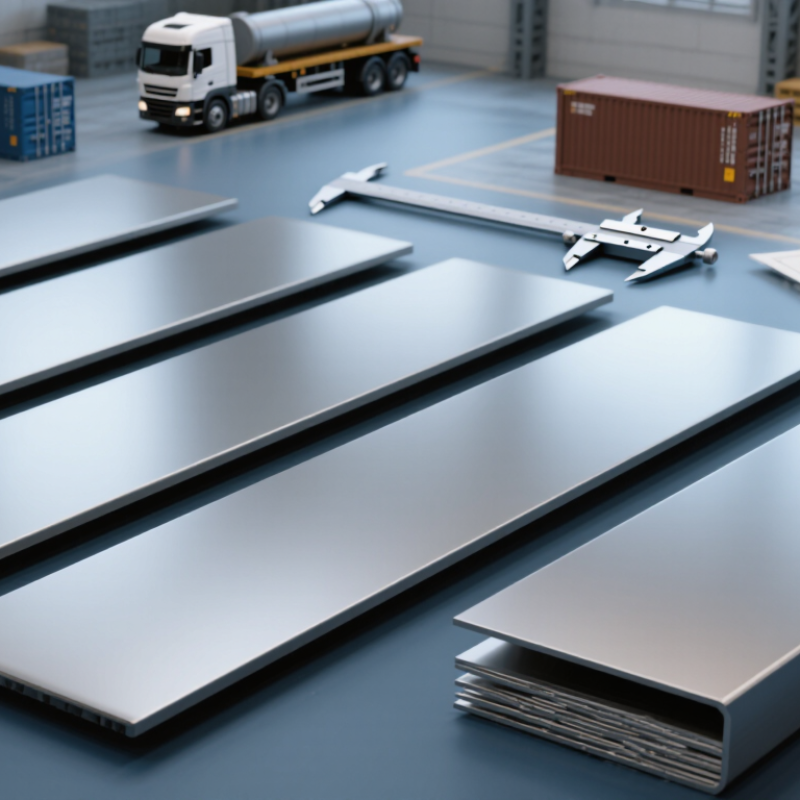
SUS304L is an austenitic stainless steel defined by low carbon content. JIS G4304 limits carbon to 0.030% maximum, helping reduce carbide precipitation after welding. Its usual composition includes 18–20% chromium and 8–12% nickel. Manganese is commonly limited to 2%, while silicon remains near 1%. This balance supports corrosion resistance, forming, and weldability.
ASTM A240/A240M lists typical minimum values for annealed 304L plate, including 170 MPa yield strength, 485 MPa tensile strength, and 40% elongation.
These values are useful references, not universal guarantees. Heat treatment and thickness can change performance.
The shortcut is choosing by grade alone. That is not always correct. Buyers should compare the mill test certificate, thickness tolerance, surface finish, and ultrasonic inspection requirements. World Stainless reported global crude stainless steel production of about 58.4 million tonnes in 2023, showing the scale of international supply. Yet large production does not remove quality variation.
Requesting heat numbers and independent chemical verification is sensible. In practical plate inspection, small surface scratches can become costly after polishing or fabrication.
One limitation deserves honesty: SUS304L performs poorly in highly chloride-rich environments compared with more resistant grades. Match the plate to the actual temperature, chemicals, welding method, and service exposure. ASTM and JIS requirements may differ slightly, so buyers should confirm the governing standard before purchase.
Choosing SUS304L stainless plates starts with the actual service condition, not a familiar catalog size. SUS304L contains lower carbon than standard 304, which supports welding and reduces the risk of sensitization near welds. However, it is not automatically suitable for every chloride-rich environment. Review temperature, chemical exposure, load, and cleaning methods before selecting thickness. Do not guess.
For thickness consider pressure, bending, vibration, and fabrication allowance. A thin plate may reduce freight cost, but it can distort during welding or handling. A thicker plate adds stiffness but increases cutting time and weight. Check the required thickness after forming, not only the nominal purchase value. Ask for thickness tolerance, flatness data, and test reports. Small details matter. For size, compare finished dimensions with available plate formats. Larger plates can reduce welding seams and material waste, yet they may require special lifting equipment. Confirm length, width, diagonal tolerance, and packing limits before shipment.
Surface finish should match the application and later processing. No.1 finish is common for hot-rolled heavy plate and offers a practical industrial appearance. 2B provides a smoother cold-rolled surface for many fabricated parts. A bright annealed or polished finish may suit visible equipment, but appearance can vary between production lots. Specify roughness, polishing direction, protective film, and the applicable standard, such as ASTM A480 or EN 10088. Request heat numbers and independent inspection when consistency matters. A careful buyer also checks whether the chosen finish hides scratches, weld marks, or uneven cleaning. That part is often underestimated.
How to Choose SUS304L Stainless Plates for Global Buyers
SUS304L plates should match the required manufacturing standard, not only a supplier’s description. Ask for compliance with ASTM A240, EN 10088-2, or the applicable national standard. Confirm the exact grade, plate dimensions, heat treatment, surface finish, and permitted tolerances. A reliable mill should provide a material test certificate for each heat number. The certificate should show chemical composition, tensile strength, yield strength, elongation, and test methods. Low carbon content matters, especially when welding is expected.
Quality control should continue beyond paperwork. Request positive material identification, thickness measurements, flatness checks, and surface inspections. For demanding applications, independent inspection can verify sampling and test results before shipment. Check whether the producer maintains a certified quality system, such as ISO 9001. Certifications help, but they are not proof of every plate’s condition. Paperwork can look complete. It can still be wrong. I have seen buyers overlook surface scratches because the mechanical results appeared acceptable.
Tips: Compare the certificate heat number with the plate markings. Specify edge condition and finish clearly. Ask for inspection photos under strong, even lighting. Confirm packaging protects plates from moisture and abrasion. If requirements are unclear, pause the purchase and obtain written clarification. A small uncertainty can become an expensive rejection. Also review test frequency, calibration records, and the inspector’s qualifications. Reliable sourcing depends on traceable evidence, careful questions, and the willingness to challenge incomplete answers.
| Quality Dimension | What Global Buyers Should Check | Reference Requirements or Typical Values | Recommended Evidence |
|---|---|---|---|
| Material Designation | Confirm the grade and equivalent designation | SUS304L is the Japanese designation commonly associated with low-carbon austenitic stainless steel. International equivalents may include ASTM 304L, UNS S30403, EN 1.4307, or X2CrNi18-9, depending on the applicable standard and product form. | Purchase specification, grade statement, heat number, and material test certificate. |
| Applicable Product Standard | Ensure the plate standard is stated in the contract | Common references include ASTM A240/A240M for chromium and chromium-nickel stainless steel plate, sheet, and strip; EN 10088-2 for stainless steel flat products; and JIS G4304 for hot-rolled stainless steel plate, sheet, and strip. | Contract specification identifying the standard, edition, plate condition, dimensions, and supplementary requirements. |
| Chemical Composition | Verify heat analysis against the selected standard | Typical ASTM 304L limits include carbon ≤ 0.030%, chromium 18.0–20.0%, nickel 8.0–12.0%, manganese ≤ 2.00%, silicon ≤ 1.00%, phosphorus ≤ 0.045%, and sulfur ≤ 0.030%. Exact limits can vary by standard and edition. | Heat-analysis results on the certificate, supported by laboratory records or positive material identification when required. |
| Mechanical Properties | Check values in the delivered condition | For annealed ASTM 304L plate, commonly specified minimum values are tensile strength of 70 ksi (approximately 485 MPa), yield strength of 25 ksi (approximately 170 MPa), and elongation of 40% in 2 inches. Maximum hardness is commonly 201 HB under ASTM requirements. | Mechanical test results linked to the heat number, including tensile, yield, elongation, and hardness where specified. |
| Heat Treatment | Confirm solution annealing and cooling practice | Austenitic 304L plate is normally supplied in a solution-annealed condition. The applicable standard may define treatment temperature, holding practice, and cooling requirements; the purchaser should confirm these details for thick or critical plate. | Heat-treatment statement, furnace record, or certificate declaration showing the supplied condition. |
| Low-Carbon Verification | Confirm that the material is genuinely 304L rather than standard 304 | The defining carbon limit for 304L is typically ≤ 0.030%. The lower carbon content helps reduce the risk of sensitization during welding, although welding procedure, service temperature, and post-weld exposure must also be considered. | Heat-analysis value for carbon and a clear grade designation on the material certificate and markings. |
| Surface Finish | Match the finish to fabrication and appearance requirements | Common finishes include No. 1 hot-rolled and annealed, 2B cold-rolled and processed, and bright-annealed finishes. Surface terminology can differ between standards, so the finish should be described by standard designation and visual requirements. | Approved surface sample, finish code, inspection criteria, and photographs or inspection records for each lot. |
| Dimensional Accuracy | Verify thickness, width, length, flatness, and edge condition | Tolerances depend on the selected standard, nominal dimensions, rolling method, and whether standard or special tolerances are ordered. Thickness should be measured at defined locations away from edges and corners. | Dimensional inspection report, calibrated measuring equipment, and packing list showing actual plate dimensions. |
| Material Traceability | Maintain a complete link from plate to production heat | Each plate or bundle should be traceable to a heat number, grade, size, quantity, manufacturing date or batch, and certificate. Marking should remain legible after handling and cutting where practical. | Plate markings, bundle tags, heat-number mapping, packing list, and certificate cross-reference. |
| Material Certificate | Request an internationally recognized inspection document | EN 10204 Type 3.1 provides a manufacturer-issued inspection certificate with specific test results. Type 3.2 adds validation by an independent inspector or the purchaser's representative when required by contract. | Signed certificate containing grade, standard, heat number, chemical analysis, mechanical results, dimensions, heat treatment, and compliance statement. |
| Quality Management | Assess the manufacturer's production-control system | ISO 9001 certification indicates a quality management system, but it does not by itself prove that every plate meets the required SUS304L product standard. The certificate scope, validity, and issuing body should be checked. | Current quality-management certificate, defined scope, validity dates, and audit or approval records when required. |
| Positive Material Identification | Use PMI for high-risk, mixed-grade, or critical applications | X-ray fluorescence can rapidly screen alloying elements such as chromium and nickel. Carbon cannot normally be confirmed accurately by standard handheld XRF, so carbon compliance should remain based on certified heat analysis or suitable laboratory testing. | PMI report identifying the tested item, location, instrument, operator, result, and acceptance criteria. |
| Ultrasonic Testing | Specify internal-quality testing when service conditions justify it | Ultrasonic testing is not automatically included in every stainless plate order. It should be separately specified for critical pressure, structural, or fatigue-sensitive applications, including the applicable acceptance class. | UT procedure, equipment calibration record, tested area, acceptance level, and signed inspection report. |
| Intergranular Corrosion Control | Evaluate testing for welded or thermally exposed components | A corrosion test may be appropriate when the plate will undergo welding or prolonged thermal exposure. The test method and acceptance criteria must be stated in the purchase order because they are not universal for every 304L plate application. | Test report referencing the selected method, specimen identification, exposure conditions, and result. |
| Corrosion and Cleanliness | Control contamination during processing, storage, and shipping | Stainless steel plate should be protected from carbon-steel contamination, chloride-bearing residues, standing water, and damaging contact during transport. Surface condition should be free from harmful scale, cracks, laminations, and unacceptable dents. | Packing specification, visual inspection record, protective-film requirement where applicable, and shipment photographs. |
| Packaging and Marking | Protect the plates through international transportation | Packaging should prevent movement, moisture accumulation, edge damage, and surface contamination. Markings should identify grade, standard, dimensions, quantity, and heat number without obscuring required surface areas. | Packing list, package photographs, shipping marks, moisture-protection details, and handling instructions. |
| Pre-Shipment Inspection | Define hold points before dispatch | A practical inspection plan may include document review, chemical and mechanical result verification, visual inspection, dimensional checks, traceability confirmation, packing inspection, and optional independent witness inspection. | Inspection and test plan, release note, nonconformance report if applicable, and final inspection dossier. |
| Buyer Specification | Write measurable requirements instead of using only “SUS304L” | State grade, product standard, thickness and dimensional tolerances, surface finish, supplied condition, test requirements, certificate type, traceability rules, packaging, and permitted deviations. | Approved technical datasheet or purchase order with clearly defined acceptance criteria. |
Note: Requirements may differ between ASTM, EN, and JIS standards and between standard editions. The buyer should identify the governing standard and verify the applicable revision before placing an order.
Supplier comparison should begin with traceability, not the lowest quotation. World Stainless reported global crude stainless steel production of about 58.4 million tonnes in 2023. That scale creates wide differences in plate consistency, testing, and export experience. Ask for heat numbers, EN 10204 3.1 certificates, chemical results, mechanical data, and recent inspection records. A polished certificate is not enough. I have seen buyers overlook plate flatness and surface defects until cutting begins.
Pricing needs a practical breakdown. Compare the base plate price, cutting charges, packing, inland delivery, insurance, and ocean freight separately. Nickel and chromium movements influence 304L costs, but conversion fees and order size also matter. LME nickel data offers a useful market reference, not a final stainless quotation. Request prices on the same thickness, width, tolerance, finish, and Incoterm. Otherwise, the cheapest offer may only look cheap.
Lead time should include production, testing, packing, customs clearance, and sailing schedules. UNCTAD’s Review of Maritime Transport reports that over 80% of global trade by volume moves by sea. Port delays can therefore change a realistic delivery plan. Export-capable suppliers should provide packing photos, container loading details, and previous shipping documents with sensitive information removed. Ask for a firm dispatch window. It may still move. That uncertainty deserves a written buffer, especially for urgent fabrication projects.
How to Choose SUS304L Stainless Plates for Global Buyers
Reliable delivery starts with packaging, not the loading date. SUS304L plates should be separated with clean paper, moisture barriers, and strong edge protectors. Use treated wooden crates or steel frames suitable for the transport route. Each bundle needs clear marks, including grade, thickness, width, length, quantity, and heat number. Salt air can stain exposed surfaces. Desiccant bags help, but they are not a complete solution.
Documentation must match the physical shipment exactly. Request a mill test certificate showing chemical composition, mechanical results, heat number, and applicable inspection standard. The commercial invoice, packing list, certificate of origin, and transport documents should use consistent descriptions. Check the HS code and delivery terms with the buyer’s customs broker. A small mismatch can delay clearance. An impressive certificate means little if its plate number is wrong. This detail is often overlooked.
Tips: Photograph bundles before dispatch. Record crate dimensions and gross weight. Confirm destination-port handling limits. Ask whether the buyer needs third-party inspection, translated documents, or digital copies before sailing. Keep one document set outside the package and another inside a waterproof pouch. Delivery planning is never perfect. Weather, port congestion, and document corrections still happen. Build a practical buffer.