China has become a major manufacturing base for unmanned aerial vehicle components, including motors, electronic speed controllers, and test equipment. Grand View Research valued the global commercial drone market at approximately US$30.61 billion in 2022. It also forecasts strong growth through 2030. That expansion raises a practical question: how can buyers verify motor quality before flight?
A reliable Drone motor tester measures thrust, torque, rotational speed, current, voltage, temperature, and vibration. These figures reveal problems that visual inspection misses. A motor may sound smooth while drawing excessive current. A small imbalance can also create visible vibration on a test bench. Drone Industry Insights continues to identify commercial operations, inspection, mapping, and delivery as important growth areas. Those applications demand repeatable testing, not attractive product claims.
Dr. Aníbal Ollero, a respected UAV researcher, has emphasized that drones must operate safely and reliably in complex environments. That principle applies directly to motor testing. Reliable data matters.
China’s best manufacturers and suppliers usually provide calibrated sensors, software records, overload protection, and technical support. However, not every catalogue specification proves laboratory performance. That is where buyers should remain cautious. Some supplier pages offer impressive accuracy figures without explaining calibration intervals, sampling rates, or test conditions.
A good Drone motor tester should support real operating scenarios. Test the motor with the intended propeller, battery, and controller. Record results at different throttle levels. Compare repeated runs. Small differences can become large failures in the air. This guide examines China’s leading suppliers through measurable performance, engineering experience, documentation quality, and after-sales reliability. Mistakes are possible. Transparent evidence is still the better starting point.
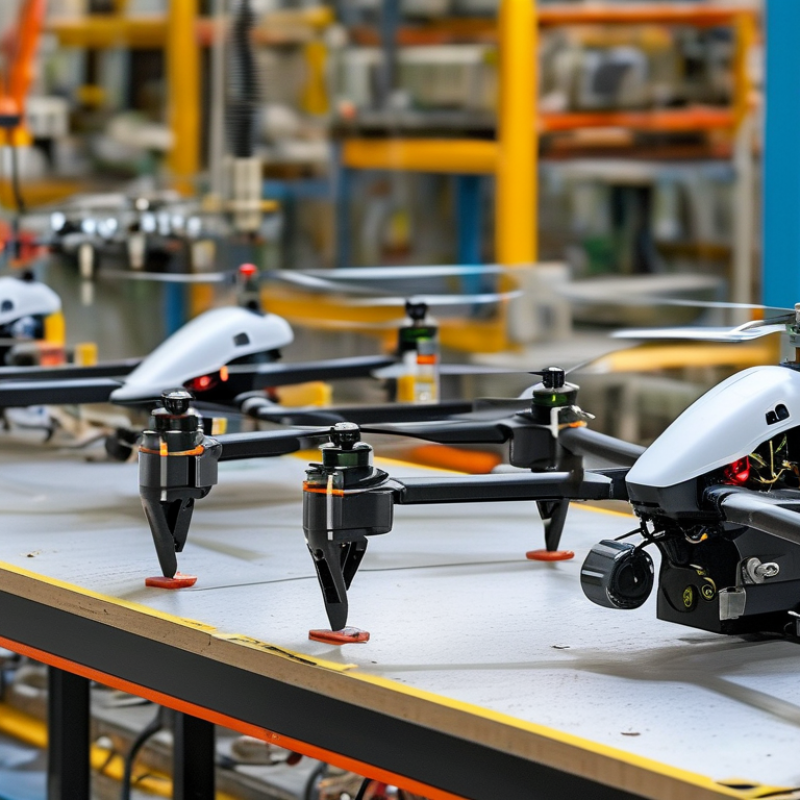
A drone motor tester is a controlled instrument for measuring motor performance before installation. It records thrust, rotational speed, voltage, current, vibration, and temperature. Some systems also evaluate electronic speed controller response under changing loads. In a workshop, these readings reveal problems that sound alone cannot detect. A motor may produce an uneven hum while still appearing functional. The tester exposes that weakness through unstable RPM or rising current. Small details matter.
Reliable testing depends on repeatable fixtures, calibrated sensors, and clear operating procedures. A solid tester should hold the motor securely and shield operators from moving parts. Its software should store test data instead of relying on handwritten notes. That history helps technicians compare production batches and identify gradual performance changes. I have found that a clean graph can still mislead when the propeller is poorly balanced. Test conditions must be recorded carefully. Room temperature matters. Battery resistance matters too. No tester is perfect. Calibration can drift, and cheap sensors may hide short voltage spikes. This is where supplier knowledge becomes important. Manufacturers and suppliers should explain accuracy limits, maintenance intervals, replacement parts, and calibration evidence. Buyers should ask how measurements are verified, not only how many features appear on a screen. A practical tester saves time, reduces failed assembly checks, and supports safer, more consistent drone development.
China Best Drone Motor Tester Manufacturers and Suppliers
The expanding drone market makes motor verification less forgiving. Grand View Research valued the global commercial drone market at USD 30.6 billion in 2022 and forecast a 13.9% CAGR through 2030. That growth increases pressure on motor tester manufacturers and suppliers to provide repeatable, traceable measurements.
Brushless outrunner motors need KV, phase resistance, no-load current, thrust, torque, and efficiency testing. A practical test records winding temperature beside the stator, not only on the housing. Inrunner motors require higher-speed checks, rotor balance, bearing noise, and vibration analysis. Their narrow thermal margin can hide problems quickly. Small gimbal motors need low-current startup testing and precise position response. Conventional thrust benches may miss these details.
Different battery systems also demand controlled voltage and current loading. Testers should compare performance at several throttle points, then log voltage sag and ESC commutation behavior. The European Union Aviation Safety Agency’s 2024 drone safety reporting continues to emphasize reliable equipment performance and operational risk control. That principle applies on the test bench too. A motor passing one run proves little. Repeatability matters more.
In field testing, I would inspect connectors after thermal cycling. Small discoloration can reveal excessive resistance. Vibration data is useful, but imperfect fixture alignment can create false alarms. That weakness deserves review. A credible supplier should provide calibration records, sensor accuracy, overload protection, and software export functions. Clear data beats impressive screens.
| Drone Motor Type | Typical Application | Key Testing Functions | Main Test Parameters | Recommended Test Equipment | Typical Evaluation Criteria | Primary Test Objective |
|---|---|---|---|---|---|---|
| Small Outrunner BLDC Motor | Micro quadcopters, indoor drones and lightweight educational aircraft | No-load test; startup test; speed and current measurement; vibration screening | Supply voltage, no-load speed, no-load current, startup time, phase resistance and vibration | DC power supply, electronic load, optical or Hall-effect tachometer, vibration sensor and resistance meter | Stable startup, consistent no-load speed, low current variation, balanced phase resistance and limited vibration | Verify basic electrical performance and assembly consistency before flight testing |
| High-KV Racing Drone Motor | FPV racing drones and high-speed freestyle platforms | High-speed load test; rapid throttle response test; efficiency test; thermal rise test | KV rating, RPM, current, input power, thrust, torque, efficiency and winding temperature | Motor thrust stand, calibrated propeller, wattmeter, tachometer, thermocouple and data acquisition system | Consistent RPM under load, fast response, acceptable current draw, controlled temperature rise and absence of desynchronization | Confirm power-to-weight performance and reliable operation during rapid throttle changes |
| Low-KV Heavy-Lift Motor | Large multirotors, agricultural drones and cargo-carrying aircraft | Continuous-load test; maximum-thrust test; endurance test; overload and thermal protection test | Thrust, torque, RPM, current, power, efficiency, winding temperature, bearing temperature and operating time | High-capacity thrust stand, programmable power supply, torque sensor, thermocouples and cooling-air measurement device | Stable thrust at rated load, acceptable temperature rise, low vibration, predictable efficiency and no insulation breakdown | Validate lifting capability, thermal margin and long-duration reliability |
| Gimbal Brushless Motor | Camera stabilization systems and precision imaging payloads | Cogging torque test; low-speed smoothness test; position-holding test; noise and vibration test | Torque ripple, minimum controllable speed, angular error, current fluctuation, acoustic noise and vibration | Precision torque sensor, encoder, inertial measurement unit, vibration analyzer and low-noise current monitor | Smooth rotation, low torque ripple, minimal angular drift, low audible noise and stable position holding | Ensure precise and quiet camera movement without visible image oscillation |
| Direct-Drive Propulsion Motor | Propeller systems without a mechanical gearbox | Propeller matching test; thrust-efficiency mapping; acceleration test; overspeed protection test | Propeller diameter and pitch, thrust, RPM, torque, current, voltage, power and efficiency | Dynamometer or thrust stand, calibrated propeller, tachometer, torque transducer and electrical power analyzer | Stable operation across the rated speed range, repeatable thrust data, acceptable efficiency and no abnormal resonance | Match the motor and propeller combination for efficient and predictable propulsion |
| Geared Brushless Motor | Applications requiring high propeller torque at reduced motor speed | Gear-ratio verification; output torque test; gearbox efficiency test; backlash and durability test | Input RPM, output RPM, gear ratio, output torque, transmission efficiency, backlash, noise and temperature | Dual-channel tachometer, torque transducers, gear backlash gauge, temperature sensors and endurance test bench | Correct gear ratio, low backlash, acceptable transmission loss, controlled temperature and consistent output torque | Assess the complete motor-and-gearbox assembly rather than the motor alone |
| High-Voltage Brushless Motor | Long-endurance drones using higher-voltage battery systems | Insulation resistance test; dielectric withstand test; loaded efficiency test; electromagnetic compatibility pre-check | Insulation resistance, leakage current, dielectric withstand voltage, phase balance, RPM, current and temperature | Insulation tester, hipot tester, power analyzer, programmable inverter and temperature acquisition system | Insulation meets the applicable safety requirement, phase currents remain balanced and operating temperature stays within design limits | Verify electrical safety and stable performance in higher-voltage propulsion systems |
| Water-Resistant Drone Motor | Marine inspection, coastal surveying and operation in humid environments | Moisture exposure test; insulation resistance test; corrosion inspection; post-exposure performance test | Insulation resistance before and after exposure, leakage current, phase resistance, temperature, RPM and vibration | Environmental chamber, water-spray or immersion fixture, insulation tester, vibration sensor and motor test stand | No unsafe leakage, no significant performance drift, no abnormal corrosion and stable startup after exposure | Evaluate resistance to moisture-related electrical and mechanical degradation |
| Folding-Arm or Compact Motor | Portable drones designed for rapid deployment and compact storage | Repeated startup test; folding mechanism clearance check; vibration test; compact-load endurance test | Startup current, RPM, thrust, vibration amplitude, bearing noise, temperature and repeated-cycle performance | Compact thrust stand, vibration analyzer, acoustic sensor, thermal camera and programmable motor controller | Consistent startup, no interference with the folding structure, stable thrust and no increase in vibration or noise | Confirm that compact mechanical packaging does not compromise propulsion reliability |
| Autonomous Flight Motor Assembly | Commercial drones using electronic speed controllers and flight-control software | ESC-motor compatibility test; throttle-command response test; fault simulation; synchronized multi-motor test | Command-to-RPM response time, current, RPM error, phase current, fault recovery and motor synchronization | Flight-controller simulator, ESC data logger, multi-channel tachometer, power analyzer and vibration monitoring system | Repeatable command response, correct fault handling, low RPM mismatch between motors and stable operation across the control range | Validate motor behavior as part of the complete propulsion and flight-control system |
Choosing among Chinese drone motor tester manufacturers requires more than comparing prices or polished websites. Evaluate the supplier’s engineering experience through real test data, production records, and technical responses. Ask whether the tester measures torque, thrust, current, voltage, rotational speed, and temperature with stable accuracy. Request a sample report from a motor test at several load levels. Clear graphs matter, but raw data matters more.
Inspect the calibration process carefully. Reliable manufacturers should provide traceable calibration certificates and explain their inspection intervals. Check the load cell, speed sensor, wiring, and emergency protection separately.
A factory video is useful, but an online demonstration cannot replace a physical inspection. Visit the facility when possible. Review assembly areas, quality records, and spare-part storage. I have seen impressive demonstrations hide weak software documentation. That possibility deserves attention.
Tips: Send your own motor for a trial test. Compare the tester’s readings with an independent calibrated instrument. Ask for repeatability results after continuous operation, not only one successful run. Confirm software export formats, operator training, warranty response times, and replacement sensor costs. A serious supplier should explain limitations without avoiding difficult questions. Also test communication speed during technical discussions. Slow replies before payment may become slower after delivery. My own evaluation can still miss hidden maintenance problems, so independent verification remains worthwhile.
China’s drone motor tester manufacturers and suppliers increasingly serve demanding development teams, repair centers, and production lines. Their capabilities should extend beyond basic RPM readings. A dependable tester measures thrust, torque, voltage, current, power, and motor temperature during controlled operation. Experienced engineers also understand propeller balance, vibration, and battery behavior. These details often expose faults that a simple spin test misses.
Quality control depends on measurement discipline. Suppliers should use calibrated sensors, documented inspection procedures, and traceable reference equipment. Each unit needs verification before shipment, including overload protection and emergency stopping. Test reports should show sampling rates, operating conditions, and acceptable error ranges. Data matters. A clear calibration record builds more confidence than attractive specifications. However, no factory is perfect. Sensor drift can occur after heavy use, and operators may interpret results differently. Regular recalibration and practical training remain necessary.
Customization separates capable suppliers from ordinary vendors. A buyer may require fixtures for different motor sizes, adjustable voltage ranges, or software supporting automated batch testing. Interfaces can export results in common formats for production records. Environmental options, such as temperature monitoring and enclosed test chambers, support more realistic evaluations. Small errors grow. Suppliers should confirm the motor’s KV rating, expected thrust range, propeller dimensions, and installation space before designing equipment. In my experience, early technical discussions prevent expensive redesigns, although rushed projects still create avoidable compromises. Reliable cooperation requires responsive engineers, transparent lead times, replacement parts, and clear acceptance testing.
Choosing a drone motor tester in China requires more than comparing online prices. Ask suppliers for calibration records, measurement ranges, probe specifications, and recent production references. A capable manufacturer should explain testing accuracy in practical terms, not only display impressive figures. Request a live video demonstration with a sample motor before placing a large order. Verify torque, speed, current, voltage, temperature, and data export functions. Do not rely on screenshots.
Tips: Put acceptance criteria in writing before payment. Include accuracy limits, software functions, delivery dates, packing details, and training support. Keep a signed test report for every inspection. Small errors matter. A checklist can still miss unstable readings after long operation, so repeat tests after several hours and compare results with a trusted reference instrument.
After-sales support often determines the real value of the tester. Confirm who handles technical questions, how quickly engineers respond, and whether remote diagnosis is available. Ask about replacement sensors, software updates, calibration services, and repair procedures. A reliable supplier should provide clear manuals, wiring diagrams, and training for operators. Review the warranty carefully, especially coverage for sensors and control units. In my experience, suppliers may promise fast support before the sale, but response times can change later. Test their communication during the quotation stage. If answers remain vague, treat that as a verification result, not a minor inconvenience.
A practical verification workflow for buying drone motor test equipment in China. The reference timeline covers technical specification review, sample testing, factory acceptance, shipment inspection, and after-sales support setup.
Reference planning data: working-day estimates commonly used for industrial test-equipment procurement. Actual timing depends on motor specifications, customization, test-load requirements, documentation, and logistics conditions.